
Emergency Leak Detection and Repair in Broomfield: Find the Source Before the Damage Spreads
A damp patch on a ceiling is rarely where the leak starts, and a rising water bill does not always mean a pipe has failed. Finding the real source comes first, because the repair, the cost of opening a wall and the question of who owns the pipe all follow from it. If water is running now, close the main shutoff valve and call our dispatch line.
Get a plumber on the leakCall about a leak
(303) 567-7524Describe the stain, sound or meter reading and a plumber who traces leaks takes the job.
- Close the main shutoff valve if water is running.
- Note where you see water, stains or damp air.
- Keep a photo of the water meter dial.
Is it a leak or normal use? A ten minute meter check settles it
Before anyone opens a wall, confirm that water is leaving the system when nothing should be using it. Suspected leaks in a slab, wall or yard all start with this check, and it works for a slow drip as well as for major water leaks.
- Stop every use. Close taps, pause the dishwasher and washer, and make sure no one flushes. Ice makers and softeners also draw water, so note them.
- Read the meter. Find the meter box near the street or curb and lift the lid. Photograph the dial and any small flow indicator.
- Wait and compare. After fifteen minutes with no use, look again. A moving indicator or a changed reading means water is escaping somewhere.
- Close the main valve and repeat. If the meter still moves with your main valve closed, the loss is on the city side of that valve. If it stops, the leak is inside your system.
A meter that moves only while a toilet tank is refilling points to a flapper or fill valve, which is a fixture repair rather than a hidden pipe. Intermittent movement, such as a short burst every few minutes, usually means a toilet is leaking silently into the bowl.
Where the water is coming from: fixture, wall, crawlspace or yard
The stain, the sound and the temperature of the water each narrow the search. This table pairs what you see with the most likely source and a safe first move.
| What you notice | Likely source | Safe first step |
|---|---|---|
| Leaky ceilings causing water stains that grow after someone showers upstairs | Drain, shower pan or supply line in the floor above | Stop using that bathroom and call; do not cut the ceiling open yourself. |
| Hissing or running water heard in a wall with every tap closed | A pressurized supply pipe | Close the main valve and read the meter. |
| Damp, musty air or wet insulation under the house | A supply or drain line in an unfinished basement or crawlspace, if your home has one | Photograph the area from the entry point and call; avoid crawling in standing water. |
| Wet soil or a soft patch in the lawn between the meter and the house | The service line on the owner side, or an irrigation line | Note the spot and which side of the meter it is on. |
| Water pooling near an outdoor spigot or the main valve | A hose bib, packing nut or the valve itself | Close the valve if you can and check the meter. |
| A wet cabinet floor under a sink | Supply stop, trap or faucet connection | Dry it, place a bowl underneath and watch for a day. |
| Water through the garage wall after rain, not after use | Roof, window or grading, not plumbing | Compare the timing with the weather before booking. |
Wall and ceiling leaks are the hardest to place, because water travels along framing before it shows. The pattern of staining often gives the direction, but the true entry point can sit several feet away.
Think the leak is behind a wall or under a floor?
Say where the stain or sound is. A same day visit is possible when demand and conditions allow, and the dispatcher tells you before anyone is sent.
Leak detection methods: listening, thermal, pressure testing and camera work
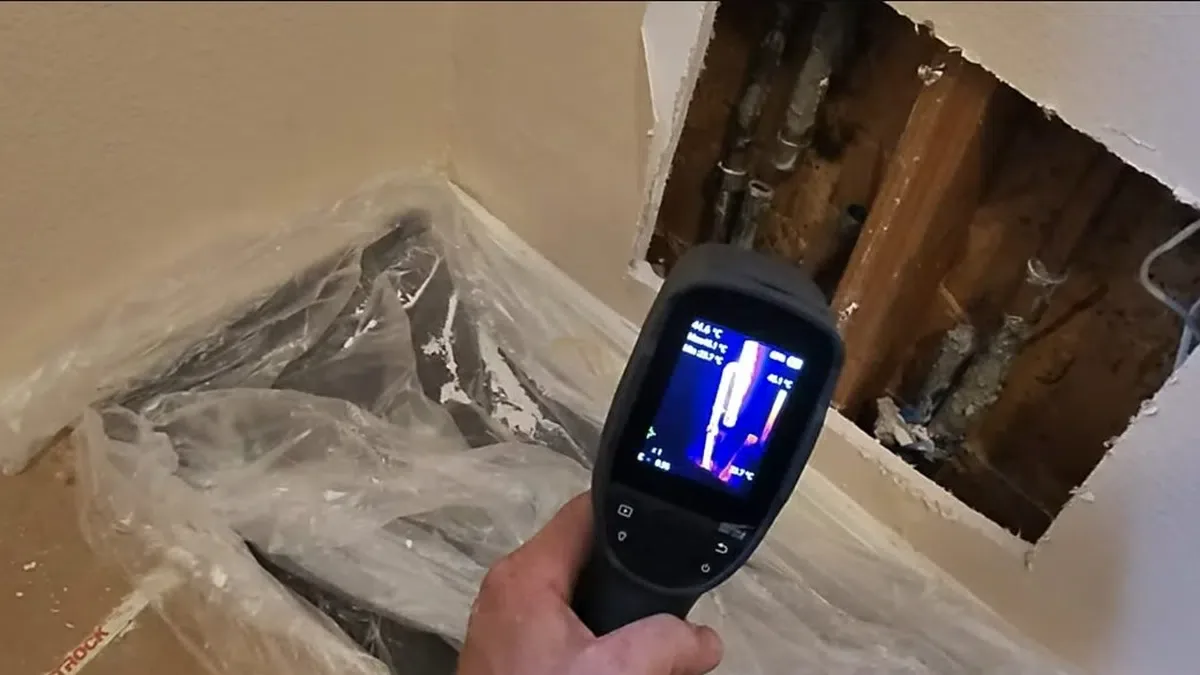
Advanced leak detection technology, whether acoustic, thermal or tracer gas, is only as good as the plumber reading it. No single tool finds every leak. A plumber picks a method from the symptom, the pipe material and how much of the house can be accessed without cutting.
| Method | What it does | Suited to |
|---|---|---|
| Acoustic and electronic listening | Amplifies the sound of water escaping a pressurized pipe so the loudest point can be marked on the surface. | Supply leaks in walls, floors and under concrete |
| Thermal and infrared imaging | Shows temperature differences where hot water or damp material changes the surface of a wall or floor. | Hot-water lines, damp insulation, radiant heat issues |
| Pressure testing | Isolates a section of piping, applies test pressure and watches whether it holds. | Confirming which branch is leaking before opening anything |
| Tracer gas, often helium | Fills a drained line with a harmless gas mixture and sniffs the surface for escaping gas. | Leaks too quiet to hear, or lines the other methods cannot read |
| Moisture mapping | Meters the moisture level across drywall, wood and flooring to outline the wet area. | Tracing a ceiling or wall stain back toward its source |
| Camera inspection | Runs a small camera through a drain line to see cracks, offsets and root entry. | Drain and sewer leaks that show up as damp soil or odor |
A whole house leak check works room by room from the meter outward, and the aim is a precise leak location, a marked point rather than a general area. Hydrostatic testing, where a section is filled with water and held at pressure, is common on drain and supply pipes alike. Ask the plumber which method they plan to use and what result would change the plan.
Whose pipe is leaking: the city side of the meter or yours
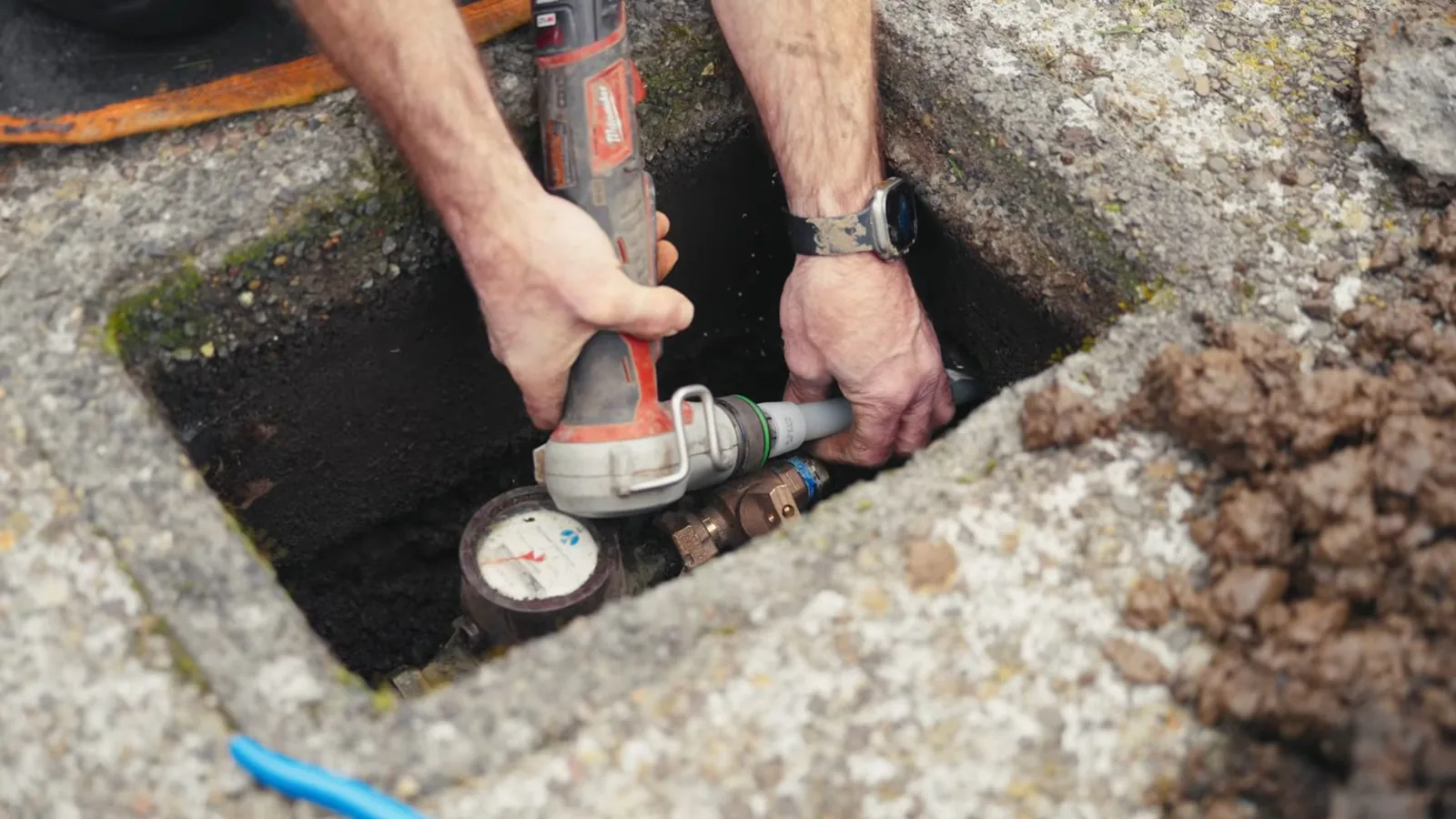
Broomfield owns the water service line between the main and the meter box or curb stop. The property owner owns it from the meter into the home. That single dividing line decides who repairs the leak and who pays.
A leak before the meter is the city’s to fix; a leak after the meter is the owner’s. If wet ground sits right at the meter box, call Broomfield Utility Services before you pay for a dig.
Source: City and County of Broomfield, Service Line Inventory page and Water Utilities document center, read 2026-10-31.
Photograph the meter and the wet area, and note whether the loss continues with your main valve closed. A plumber can confirm which side you are on, but the city decides what it owns.
What to document and what the leak quote should say
A good leak visit ends with paper you can use. Whether you rent, own, or file a claim later, the record matters as much as the repair.
- A photo of the meter reading and of every wet area before anything is dried.
- The plumber’s finding in plain words: which pipe, where, and how it was confirmed. Leak location documentation, a photo of the marked spot, is part of that.
- A scope that names what will be opened, what will be repaired and who patches drywall, flooring or concrete afterward.
- Whether a Broomfield permit or site plan applies. The city’s Building Division asks for a site plan on water and sewer line repairs.
- Any detection report or photos the plumber took, saved for your insurer or landlord.
Insurance policies differ on sudden water loss versus long-term seepage, so read the wording or ask your agent before you pay for work you hope to claim.
Leaks people miss: underground, appliance, attic and silent toilet leaks
The leaks that do the most damage are often the ones nobody sees. A high water bill with no change in habits is the usual first sign, and humidity hides leaks by drying stains before anyone notices them.
- Underground leaks. Basement and foundation plumbing can leak the same way as yard lines, with damp walls instead of soggy grass. A leak in the yard line between the meter and the house shows as a green or soggy patch, or as a meter that moves while everything is off. Sprinkler system leaks look similar and are found by closing the irrigation valve and rereading the meter.
- Appliance leaks. Washer hoses, dishwasher supply lines and ice maker tubes fail slowly. Pull the appliance forward and check the floor and the connection; appliance leak cleanup afterwards means drying the subfloor, not just the surface.
- Attic plumbing. Supply lines, a water heater in the attic and air handler drains leak onto ceilings below. Condensation on cold pipes can look like a leak and is not one.
- Silent toilet leaks. Inspect toilets for silent leaks by adding a few drops of dye to the tank; color in the bowl within fifteen minutes means the flapper is leaking.
- Smart leak detection. Battery sensors under sinks and by the water heater, or a smart water shutoff, warn you sooner than a stain does.
- Past leaks. Ask for any leak history on a home you are buying, because repaired pipe and old stains tell you where weak spots are.
Ignoring small leaks is how a minor repair becomes a restoration job; damage caused by ignoring leaks includes rot, mold and structural damage from prolonged leaks to framing and subfloor. The warning signs of hidden leaks are a bill that climbs, a musty smell and a meter that will not rest. A short pipe condition check, plumbing maintenance and inspections of exposed lines, valves and heater connections, is a sensible follow-up after any hidden leak.
Leak repair once the source is known
Repair ranges from tightening a supply connection to replacing a section of pipe. Fixture leaks, such as a failing shutoff valve or a leaky faucet repair at the base, are quick jobs. For a water line problem that keeps returning, see water line repair and replacement, and for water loss under a concrete floor see slab leak detection and repair. A pinhole leak in aging copper deserves a talk about whether more of the line is near failure.
Outdoor lines need a different eye. Broomfield’s frost depth is 36 inches below finished grade, so buried water lines are designed deeper than that, while hose bibs and exposed lines are the ones that freeze. Insulate what is exposed and shut off and drain outdoor spigots before a hard freeze.
Before work starts, ask what state license the plumber holds, whether Broomfield requires a contractor license for the job, and who pulls any permit. A leak at a shower valve or supply stop belongs on our page for faucet, toilet and fixture repair, and water that has already soaked drywall is covered under water damage restoration.
If water is reaching an outlet, panel or light fixture, stay clear and shut off the water. Do not touch wet electrical equipment; call an electrician as well as the dispatch line.
Leak questions Broomfield homeowners ask
I see water leaking outside near my water valve. What should I do?
Look at which side of the meter the water is on. Wet ground at or before the meter box points to the city line, and Broomfield Utility Services handles that. Water between the meter and the house is the owner’s line, and a plumber should locate it.
Close your own shutoff valve if you can reach it, take a photo of the wet area and the meter, and call.
I think there is a leak in the wall behind my garage. How do I find it?
Start with the meter check on this page. If the meter moves with everything off, a supply line is leaking. If the meter is still, the water may be a drain, roof or window issue.
A plumber can listen along the wall, map moisture and pressure test the lines that run through it before any drywall is cut.
How do I tell whether I have a leak under the house, in the basement or in a crawlspace?
Signs include a musty smell, wet insulation, a floor that feels cold or soft, and a meter that moves at night. If your home has an unfinished basement or crawlspace, a plumber can check exposed piping directly. Where lines are buried or enclosed, listening and pressure tests do the work.
My shower pipe leaks at the wall. Is that a leak detection job?
Usually it is a fixture repair, not a search. Shower valves and wall connections are covered on the fixture repair page linked above.
Water where it should not be?
Describe what you see and where. The dispatcher tells you whether to shut the water off now or whether the visit can be scheduled.
Call (303) 567-7524